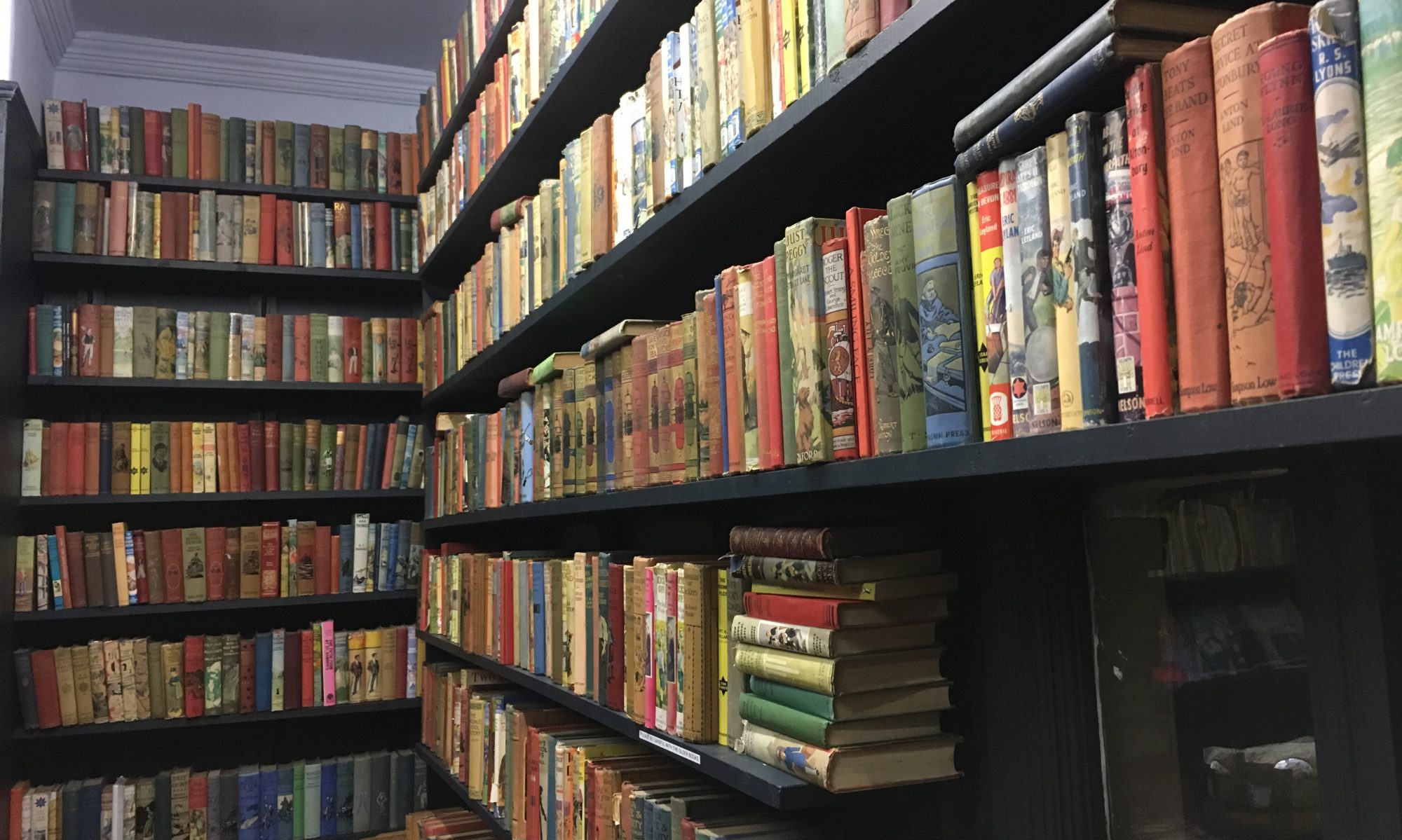

The Case of the Reluctant Eight (or Possibly Twelve, Depending on phase of the moon and current location).

a book burning in library

Frank first noticed it on a Tuesday, which is already suspicious because Tuesdays are widely understood (by those who understand anything at all) to be structurally weaker days in the fabric of reality.

A book had sold.

This, in itself, was not unusual. Books are meant to be sold, in the same way coffee machines are designed to eventually betray you. What was unusual was that the book…a perfectly ordinary, slightly damp paperback about maritime taxation in 1973, was not where it had been meticulously, lovingly, and definitely placed.

Frank checked again. And then again, but with more suspicion.

Then once more, but this time with the quiet dread of a man who has begun to suspect that the universe is not only indifferent, but actively misfiling things.

It wasn’t there.

A Working Theory of Book Evasion

By Thursday (which had begun behaving like a Wednesday wearing a fake moustache), Frank had compiled a list:

8 missing books (or 11, depending on how one counts absence)

  1. All recently ordered
  2. All previously “definitely seen”
  3. None willing to be located under any known laws of physics, filing systems, or swearing

This led to the only reasonable conclusion:

  • Books do not stay where they are put.
  • They wait.

On the Secret Lives of Books

It is widely not known (because no one who discovers it is taken seriously afterward) that books are pan-dimensional entities with literary camouflage.

Their apparent purpose… to sit quietly until purchased –is merely a social contract they have no intention of honouring.

In reality:

A book exists simultaneously in:

  • your shelf
  • a secondary archive dimension (often mistaken for “I’ll check later”)
  • and a migratory holding pattern known as The Pending

When ordered, a book must decide:

  1. Do I go?
  2. Do I vanish briefly to increase mystique?
  3. Do I refuse entirely and test this human’s psychological stability?

Most choose option 3. It’s the funniest.

The Wormhole Hypothesis

When a book is ordered, a small, polite wormhole opens behind it.

Not flashy. Not sci-fi. More like the kind of gap you’d ignore behind a wardrobe because you’ve got other things on.

The book slips through.

Where does it go?

Reports vary, but leading theories include:

  • The Library of Alexandria (Expanded Edition)
  • Not destroyed—just relocated to a dimension where overdue fines are metaphysical.
  • The Moon (Back Office)

The visible moon is just the public-facing shell. The inside is shelving. Endless shelving with no catalogue.

  • The Customer Assessment Layer

Books sometimes wait to see if the buyer is worthy. (Criteria unclear. Possibly vibes.)

Dear customer

Why the Book you ordered is unavailable?

Statistically, it shouldn’t always be the missing ones that sell.

But statistics assumes:

  • Books are inert
  • Reality is stable
  • The bookseller is not in a narrative

All three are demonstrably false.

What’s actually happening is:

  • The books that want to leave don’t get ordered
  • The books that refuse to leave get ordered repeatedly
  • You are caught in a feedback loop of narrative inconvenience

Frank, at this point, recognised this immediately as:

“Classic low-level cosmic admin sabotage.”

He set his mind to finding the creature critter responsible, he searched for his Encyclopaedia of Visitors. He couldn’t find it.

Nearly Sorted

There was a bookshop run by a woman who was almost never in it, on a street that had once been on maps before paper fell out of fashion.

Strictly speaking, this was not a problem, because the sign in the window, handwritten, uppercase, in blue sharpie, always reassured passers-by:

BACK IN 7 MINUTES

Occasionally the number changed. Sometimes it was 3. Once it was 11½, which caused a minor philosophical incident involving a man from the council and a sandwich. But the essential promise remained: she would be back. Shortly.

She was not.

The woman (whose name varied depending on which invoice she was ignoring), was, at any given moment, elsewhere. Whether this “elsewhere” existed in the physical sense or was merely a well-furnished annex of her own mind was difficult to determine and, for tax purposes, inadvisable to pursue.

What could be confirmed is that she had a number of jobs.

Not jobs in the traditional sense, where one goes somewhere and does a thing and receives money that corresponds vaguely to the thing. These were gig economy jobs, which meant they were:

  1. Temporary
  2. Poorly explained
  3. Slightly insulting to the concept of labour

For instance, on Tuesdays (or what she referred to as Tuesdays, though the calendar had long since stopped agreeing), she worked as a mixologist, crafting elaborate mocktails for people who wished to feel decadent without the administrative burden of actual intoxication. Except they added alcohol.

Her most popular creation was called The Absent Proprietor: crushed ice, lime, something floral, and a garnish of mild regret.

On Wednesdays she was paid to be a Bad Conversationalist, a role in which she would attend corporate events and respond to everything with phrases such as:
“Hmm,”
“That’s interesting,”
and
“I suppose it depends what you mean by ‘meaning.’”

Demand for this was inexplicably high.

On alternate Thursdays she was employed as a Person Who Plugs Things In, which involved arriving at offices where nothing worked, plugging in several obvious cables, and leaving before anyone could ask deeper questions about existence or IT support.

Fridays were reserved for Therapist to Out-of-Work Actors, where she would sit in a room with individuals who had once been teachers, policemen, or the concept of longing in fringe productions, and gently reassure them that their greatest role was yet to come, ideally in a context that provided snacks.

Other engagements included:

  • Ashtray Emptier (Ceremonial)
  • Barrel Roller (Non-Union)
  • Polystyrene Picker Upper (Advanced Level)

The last required certification.

Meanwhile, back at the bookshop (which may or may not have been real, but certainly paid bills), the sign continued its quiet, persistent lie.

BACK IN 5 MINUTES

Inside, the books waited with the patient disappointment of objects that had been promised purpose. They had been arranged once, possibly alphabetically, though over time the system had evolved into something more expressive:

  • Conspiracy under non-fiction
  • Non-fiction under esoteric
  • Esoteric under “Miscellaneous Feelings”

Customers came.

They knocked.

They peered.

They left notes.

The notes were slipped under the door, polite at first:

“Hello, I’m looking for a copy of something by… I can’t quite remember but it has a blue cover…”

“Do you stock non-linear local history?”

“Are you… open?”

These enquiries were always answered.

Not directly, of course. That would be absurd.

Several days later, each customer would receive a reply—sometimes by email, sometimes by post, once via a small, determined pigeon—containing a carefully formatted recipe for a mocktail.

Dear Sir,
Thank you for your enquiry.
Have you considered the following?

The Bitter Index

  • 50ml something citrus and strong
  • 10ml syrup (optional optimism)
  • 50ml something random
  • Shake until resolved

Best wishes.

No further explanation was provided.

Over time, a small community formed around the shop. Not all readers, but people who had received these recipes and felt, somehow, answered.

They began to gather outside.

They compared notes.

They debated whether the woman existed, or whether the shop itself was simply a manifestation of deferred intention or perhaps a place where things almost happened, perpetually.

One man insisted he had seen her once, rushing past with a crate of limes and a look of profound distraction.

Another claimed she had been inside all along, just slightly out of phase with the rest of reality.

This was considered plausible.

The sign, meanwhile, had settled into a comfortable rhythm:

BACK IN 2 MINUTES

It had said this for three weeks.

No one removed it. It had achieved a kind of authority.

Inside the shop, a single book lay open on the counter. Its pages fluttered occasionally, as if in response to a breeze that could not be sourced.

If one looked closely (though no one could, as the door remained locked) one might have noticed a small handwritten note in the margin:

“Must come back. Nearly sorted.”

The books slipped through time and space into another dimension, and the bookshop promptly became a pharmacy.

Progress, Challenges, and New Beginnings

The journey of Border Bookshop continues to be one of adaptation, persistence, and hope. As mentioned in our last post, transitioning our vast collection of books, comics, and magazines online has been an enormous undertaking. Despite years of effort, we’re still not halfway through cataloguing our inventory. With thousands of single-issue comics and vintage magazines waiting to be discovered, much of our stock remains accessible only through direct inquiries.

As if this ongoing challenge wasn’t enough, a curveball from the council has left us in limbo regarding the future of our current premises. While we won’t go into specifics, navigating these uncertainties has been another layer of complexity in an already demanding situation.

That said, there’s been a bright spot in 2025 so far. We’re thrilled to share that we’ve raised £58.10 for our fledgling charity, aimed at supporting neurodivergent individuals. Half of our profits from every book sale for the next few months are being donated toward this cause. It’s a modest start, but it represents something much bigger: hope for a brighter future and the potential to create meaningful change.

To everyone who has purchased a book or supported us in any way, thank you. Your kindness helps keep Border Books alive and allows us to contribute to a cause close to our hearts.

Here’s to continued progress and positivity, even in the face of challenges!