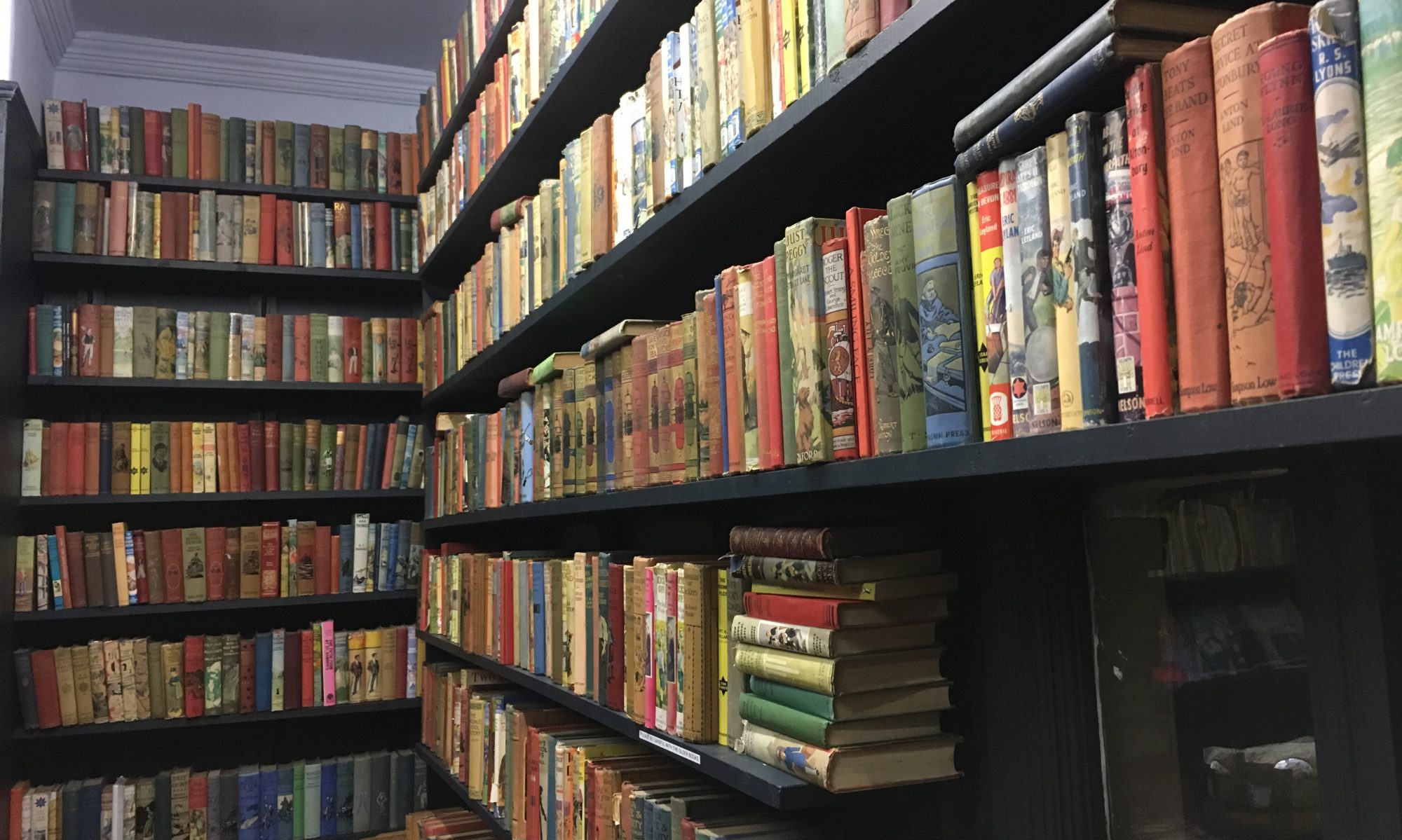

The Case of the Reluctant Eight (or Possibly Twelve, Depending on phase of the moon and current location).

a book burning in library

Frank first noticed it on a Tuesday, which is already suspicious because Tuesdays are widely understood (by those who understand anything at all) to be structurally weaker days in the fabric of reality.

A book had sold.

This, in itself, was not unusual. Books are meant to be sold, in the same way coffee machines are designed to eventually betray you. What was unusual was that the book…a perfectly ordinary, slightly damp paperback about maritime taxation in 1973, was not where it had been meticulously, lovingly, and definitely placed.

Frank checked again. And then again, but with more suspicion.

Then once more, but this time with the quiet dread of a man who has begun to suspect that the universe is not only indifferent, but actively misfiling things.

It wasn’t there.

A Working Theory of Book Evasion

By Thursday (which had begun behaving like a Wednesday wearing a fake moustache), Frank had compiled a list:

8 missing books (or 11, depending on how one counts absence)

  1. All recently ordered
  2. All previously “definitely seen”
  3. None willing to be located under any known laws of physics, filing systems, or swearing

This led to the only reasonable conclusion:

  • Books do not stay where they are put.
  • They wait.

On the Secret Lives of Books

It is widely not known (because no one who discovers it is taken seriously afterward) that books are pan-dimensional entities with literary camouflage.

Their apparent purpose… to sit quietly until purchased –is merely a social contract they have no intention of honouring.

In reality:

A book exists simultaneously in:

  • your shelf
  • a secondary archive dimension (often mistaken for “I’ll check later”)
  • and a migratory holding pattern known as The Pending

When ordered, a book must decide:

  1. Do I go?
  2. Do I vanish briefly to increase mystique?
  3. Do I refuse entirely and test this human’s psychological stability?

Most choose option 3. It’s the funniest.

The Wormhole Hypothesis

When a book is ordered, a small, polite wormhole opens behind it.

Not flashy. Not sci-fi. More like the kind of gap you’d ignore behind a wardrobe because you’ve got other things on.

The book slips through.

Where does it go?

Reports vary, but leading theories include:

  • The Library of Alexandria (Expanded Edition)
  • Not destroyed—just relocated to a dimension where overdue fines are metaphysical.
  • The Moon (Back Office)

The visible moon is just the public-facing shell. The inside is shelving. Endless shelving with no catalogue.

  • The Customer Assessment Layer

Books sometimes wait to see if the buyer is worthy. (Criteria unclear. Possibly vibes.)

Dear customer

Why the Book you ordered is unavailable?

Statistically, it shouldn’t always be the missing ones that sell.

But statistics assumes:

  • Books are inert
  • Reality is stable
  • The bookseller is not in a narrative

All three are demonstrably false.

What’s actually happening is:

  • The books that want to leave don’t get ordered
  • The books that refuse to leave get ordered repeatedly
  • You are caught in a feedback loop of narrative inconvenience

Frank, at this point, recognised this immediately as:

“Classic low-level cosmic admin sabotage.”

He set his mind to finding the creature critter responsible, he searched for his Encyclopaedia of Visitors. He couldn’t find it.

Nearly Sorted

There was a bookshop run by a woman who was almost never in it, on a street that had once been on maps before paper fell out of fashion.

Strictly speaking, this was not a problem, because the sign in the window, handwritten, uppercase, in blue sharpie, always reassured passers-by:

BACK IN 7 MINUTES

Occasionally the number changed. Sometimes it was 3. Once it was 11½, which caused a minor philosophical incident involving a man from the council and a sandwich. But the essential promise remained: she would be back. Shortly.

She was not.

The woman (whose name varied depending on which invoice she was ignoring), was, at any given moment, elsewhere. Whether this “elsewhere” existed in the physical sense or was merely a well-furnished annex of her own mind was difficult to determine and, for tax purposes, inadvisable to pursue.

What could be confirmed is that she had a number of jobs.

Not jobs in the traditional sense, where one goes somewhere and does a thing and receives money that corresponds vaguely to the thing. These were gig economy jobs, which meant they were:

  1. Temporary
  2. Poorly explained
  3. Slightly insulting to the concept of labour

For instance, on Tuesdays (or what she referred to as Tuesdays, though the calendar had long since stopped agreeing), she worked as a mixologist, crafting elaborate mocktails for people who wished to feel decadent without the administrative burden of actual intoxication. Except they added alcohol.

Her most popular creation was called The Absent Proprietor: crushed ice, lime, something floral, and a garnish of mild regret.

On Wednesdays she was paid to be a Bad Conversationalist, a role in which she would attend corporate events and respond to everything with phrases such as:
“Hmm,”
“That’s interesting,”
and
“I suppose it depends what you mean by ‘meaning.’”

Demand for this was inexplicably high.

On alternate Thursdays she was employed as a Person Who Plugs Things In, which involved arriving at offices where nothing worked, plugging in several obvious cables, and leaving before anyone could ask deeper questions about existence or IT support.

Fridays were reserved for Therapist to Out-of-Work Actors, where she would sit in a room with individuals who had once been teachers, policemen, or the concept of longing in fringe productions, and gently reassure them that their greatest role was yet to come, ideally in a context that provided snacks.

Other engagements included:

  • Ashtray Emptier (Ceremonial)
  • Barrel Roller (Non-Union)
  • Polystyrene Picker Upper (Advanced Level)

The last required certification.

Meanwhile, back at the bookshop (which may or may not have been real, but certainly paid bills), the sign continued its quiet, persistent lie.

BACK IN 5 MINUTES

Inside, the books waited with the patient disappointment of objects that had been promised purpose. They had been arranged once, possibly alphabetically, though over time the system had evolved into something more expressive:

  • Conspiracy under non-fiction
  • Non-fiction under esoteric
  • Esoteric under “Miscellaneous Feelings”

Customers came.

They knocked.

They peered.

They left notes.

The notes were slipped under the door, polite at first:

“Hello, I’m looking for a copy of something by… I can’t quite remember but it has a blue cover…”

“Do you stock non-linear local history?”

“Are you… open?”

These enquiries were always answered.

Not directly, of course. That would be absurd.

Several days later, each customer would receive a reply—sometimes by email, sometimes by post, once via a small, determined pigeon—containing a carefully formatted recipe for a mocktail.

Dear Sir,
Thank you for your enquiry.
Have you considered the following?

The Bitter Index

  • 50ml something citrus and strong
  • 10ml syrup (optional optimism)
  • 50ml something random
  • Shake until resolved

Best wishes.

No further explanation was provided.

Over time, a small community formed around the shop. Not all readers, but people who had received these recipes and felt, somehow, answered.

They began to gather outside.

They compared notes.

They debated whether the woman existed, or whether the shop itself was simply a manifestation of deferred intention or perhaps a place where things almost happened, perpetually.

One man insisted he had seen her once, rushing past with a crate of limes and a look of profound distraction.

Another claimed she had been inside all along, just slightly out of phase with the rest of reality.

This was considered plausible.

The sign, meanwhile, had settled into a comfortable rhythm:

BACK IN 2 MINUTES

It had said this for three weeks.

No one removed it. It had achieved a kind of authority.

Inside the shop, a single book lay open on the counter. Its pages fluttered occasionally, as if in response to a breeze that could not be sourced.

If one looked closely (though no one could, as the door remained locked) one might have noticed a small handwritten note in the margin:

“Must come back. Nearly sorted.”

The books slipped through time and space into another dimension, and the bookshop promptly became a pharmacy.

Marilyn Monroe: 12 Books to Enter the Myth, the Mystery, and the Media Machine

a photo of a Collection of Marilyn Monroe books


1. Marilyn Monroe: Her Life in Pictures by James Spada & George Zeno
Main focus: A visual biography showing Monroe’s evolution through rare and iconic photography.
Why it stands out: Less words, more impact. It’s a time capsule of a woman constantly becoming.
Note: Great gift or starter book… glam and ghost in equal measure.
Link to my Listing on Abe Books
Amazon Affiliate Link
________________________________________
2. Marilyn: A Never-Ending Dream by James Spada & George Zeno
Main focus: A lush companion to the above, with deeper context and dreamlike presentation.
Why it’s interesting: Leans into the mythology — as if the dream might still be dreaming us.
Link to my Listing on Abe Books
Amazon Affiliate Link
________________________________________
3. Marilyn Monroe (The Screen Greats) by Tom Hutchinson
Main focus: Career overview with vintage magazine appeal.
Why it’s worth a look: Compact but surprisingly insightful… a great crash course in the filmography.
Note: One for the collectors of old-school film books.
Link to my Listing on Abe Books
Amazon Affiliate Link
________________________________________
4. Marilyn: The Ultimate Look at the Legend by James Haspiel
Main focus: Intimate fan-favourite stories from someone who followed her life obsessively.
Why it stands out: Written with devotion and detail , it feels like a scrapbook from the inside.
Link to my Listing on Abe Books
Amazon Affiliate Link
________________________________________
5. Marilyn at Twentieth Century Fox by Lawrence Crown
Main focus: Studio stills and behind-the-scenes candids from her time under contract.
Why it’s fascinating: Peeks behind the Hollywood curtain at a woman owned by the machine, yet owning every shot.
Link to my Listing on Abe Books
Amazon Affiliate Link
________________________________________
6. Marilyn Monroe by Roger Baker
Main theory: Argues that Marilyn was shaped… and shattered, by the roles she played on and off screen.
Why it’s deeper than it looks: A surprisingly feminist critique in a tidy package.
Link to my Listing on Abe Books
Amazon Affiliate Link
________________________________________
7. Marilyn Among Friends by Sam Shaw & Norman Rosten
Main focus: Photos and words from two close friends — one a poet, the other a photographer.
Why it matters: Feels like the real her, unfiltered and funny. A love letter, not an exposé.
Link to my Listing on Abe Books
Amazon Affiliate Link
________________________________________
8. Marilyn Monroe: The Biography by Donald Spoto
Main theory: Definitive and sympathetic, it attempts to separate fact from fiction.
Why it stands out: Written with care, backed by research. For anyone wanting the full arc.
Link to my listing on Abe Books
Amazon Affiliate Link
________________________________________
9. The Marilyn Scandal by Sandra Shevey
Main theory: The real story told by those who knew her — and the Hollywood machine that used her.
Why it’s juicy: Firsthand gossip with a bite, just shy of scandalous.
Link to my Listing on Abe Books
Amazon Affiliate Link
________________________________________
10. Goddess: The Secret Lives of Marilyn Monroe by Anthony Summers
Main theory: Explores Monroe’s links to the Kennedys, the FBI, and power games beyond Hollywood.
Why it’s compelling: Widely debated; part biography, part conspiracy.
Note: If you like “what really happened?” books, start here.
Link to my Listing on Abe Books
Amazon Affiliate Link
________________________________________
11. Marilyn on Marilyn edited by Roger G. Taylor
Main focus: Monroe in her own words — interviews, letters, fragments of self-reflection.
Why it’s powerful: A woman edited and rewritten by others, finally speaking for herself.
Link to my Listing on Abe Books
Amazon Affiliate Link
________________________________________
12. Bonus: Your Own Reflection
Main theory: Marilyn was a mirror, and we’re still projecting onto her.
Why it matters: Read a few of these books and ask: do you see her… or something else entirely?
________________________________________

Who Killed JFK?

Various Books on the JFK Assassination

The Ultimate Quickie Booklist for the Chronically Curious and Mildly Conspiratorial


1. The Devil’s Chessboard by David Talbot
Main theory: The CIA, particularly Allen Dulles, played a far deeper role than the public knows… or wants to believe.
Affiliate link
Why it hits: Reads like a political thriller, but it’s meticulously sourced. If you read one book, make it this.


2. Final Judgment by Michael Collins Piper
Main theory: Explores Mossad’s potential involvement and connections between organised crime, intelligence, and international power structures.
Affiliate link to kindle version
Note: Harder to find now, some say it’s “too hot for mainstream shelves.”
Why it’s interesting: Even skeptics say it asks the kind of questions others won’t touch.


3. Someone Would Have Talked by Larry Hancock
Main theory: Exactly what it says on the tin – follows the breadcrumb trail of leaks, whispers, and ignored insiders.
Bookshop link
Why it stands out: Combines fact with plausible speculation, making a case for a deep cover-up over time.


4. Best Evidence by David S. Lifton
Main theory: JFK’s body was altered before the autopsy, to literally change the evidence.
Bookshop link
(cheapest I’ve found is £199 so you might want to look around)
Why it’s unforgettable: It’s the forensic rabbit hole… where the medical evidence becomes the story.


5. Inside the Assassination Records Review Board (5 vols.) by Douglas P. Horne
Main theory: The ARRB wasn’t just reviewing documents – it stumbled upon deep inconsistencies that still haven’t been addressed.
Note: Long, detailed, and not for the faint of heart (or short of time).
Vol 1 is here
Why it’s essential: For the JFK researcher who wants primary source juice.


6. Cosmic Trigger: The Final Secret of the Illuminati by Robert Anton Wilson
Main theory: Reality is a trip, and so is the JFK assassination ~ especially when viewed through chaos magick, Discordianism, and Timothy Leary’s contact list.
Affiliate link
Why it’s fun: Not strictly a JFK book ~ but it puts the conspiracy in context. Mind-bending and playful. (n.b. I put this in for comic relief but seriously if you’ve never read and RAW –now might be the time)


7. JFK to 9/11: Everything Is a Rich Man’s Trick by Francis Richard Conolly (with documentary tie-in)
Main theory: Connects Kennedy’s death to a global elite power grab stretching through to 9/11.
Affiliate link
Watch on YouTube (3+ hrs): Here’s a link
Why it’s interesting: Over the top? Maybe. But it helped many people start asking questions.


8. Under Cover of Night by Sean Fetter
Main theory: A new take tying JFK to covert networks operating behind the Cold War facade.
Affiliate Link
Why it’s notable: New book on the block. Sets out to demonstrate LBJ was suspect number one.


9. The Killing of a President by Robert Groden
Why it hits: A striking photographic deep dive into the JFK assassination –from the motorcade to the aftermath– packed with visuals, documents, and diagrams. A go-to for anyone wanting to see the case laid out frame by frame.
Affiliate link

Fun fact: Groden brought the Zapruder film to national TV in 1975, making sure the world saw the “head snap” for the first time.


10. Not in Your Lifetime by Anthony Summers
Main theory: There was a conspiracy, and Oswald didn’t act alone. Summers builds the case using newly released files and decades of interviews.
Affiliate link
Why it hits: Balanced and deeply researched. A great starting point for those wanting both detail and digestibility.


11. The Dark Side of Camelot by Seymour Hersh
Main theory: JFK’s public image was a façade. Behind it: corruption, cover-ups, and secret deals.
Affiliate link
Why it hits: More political scandal than assassination theory, but it contextualises why some wanted him out.


12. End of Days by James L. Swanson
Main theory: A meticulous, hour-by-hour account of JFK’s final day, focusing on the events leading up to and following the assassination.
Affililaite link
Why it hits: For readers seeking a comprehensive timeline of November 22, 1963, this book offers a detailed narrative without venturing into speculative theories. While it doesn’t explore conspiracy angles, it provides valuable context and insight into the day’s events.​

Incidentally: Just two months before his assassination, JFK and Jackie filmed a lighthearted spy spoof where he jokingly staged being shot. It was part of a mock thriller project~eerily foreshadowing real events. Humour, perhaps, to cope with very real fears.


Incidentally on a Sidebar:
Many individuals connected to the JFK assassination: whether witnesses, investigators, or side characters – died under odd or sudden circumstances not long after November 22, 1963.
Oswald. Ruby. Florence Smith. Gary Bannister. Mary Pinchot Meyer. Jim Caddy. Gayle Underhill.
Coincidence? You decide.


Sidebar on a sidebar: The JFK Faked His Death Theory for the wild-side of conspiracy fans.
Main theory: He staged the assassination because he knew he was a marked man.
Watch: JFKX (affiliate link)
Why it breaks your brain: It asks you to believe that everything was theatre – including the Zapruder film.


“There are so many JFK books out there, from wild theories to sober analysis, we barely scratched the surface. Maybe we’ll circle back one day…”


BONUS BREADCRUMBS (because my next post is about Marilyn Monroe books in my actual shop).

13. Goddess: The Secret Lives of Marilyn Monroe by Anthony Summers
Main theory: Marilyn’s ties to the Kennedy brothers ran deeper – and darker – than anyone wanted to admit.
Affiliate link
Why it’s poetic-tragic: A tragic starlet. A dangerous triangle. One of the greatest adjacent mysteries to JFK’s death.
(Side note: if she had faked her death too, we’d absolutely be rooting for her.)


Don’t just follow the trail of breadcrumbs ~ question why the crumbs are shaped like ducks, who baked the loaf, and why it’s always a confusing recipe.


Affiliate links help support small bookshops and independent creators. If you purchase through the above links, I may earn a small commission at no extra cost to you – and it helps me keep my bookshop open. Many thanks for your support. You can also search anything on Amazon here and that might score me a sip of coffee 😉


Books About Elon Musk, Algorithms, and the Power of Reach

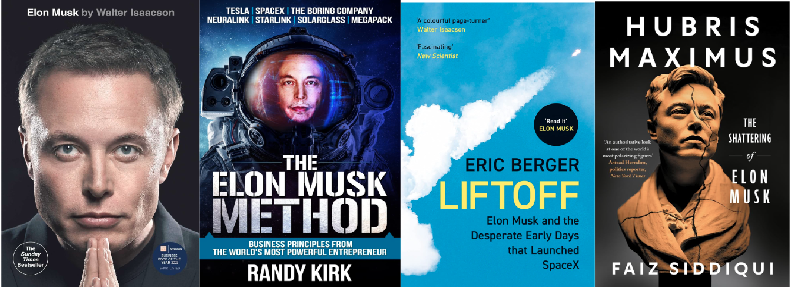
four books about Elon Musk by Walter Isaacson, Randy Kirk, Eric Berger and Faiz Siddiqui

Can celebrity override suppression ~ or does the algorithm always win?
Let’s talk about the weirdest genre in modern publishing: Books About Elon Musk.
Love him, hate him, or side-eye him from the shadows – Elon generates content just by existing.

What happens when the algorithm that controls discourse also controls the perception of books about the algorithm’s controller?

Can You Even Talk About Elon on X?
Some users report that posts about Elon –especially critical or analytical ones– seem to disappear or underperform. Others point out that even the most hyped biographies don’t stay long in the conversation unless they’re viral-adjacent. The algorithm wants memes, not manuscripts, the platforms reward attention, not information.

The Algorithm as Gatekeeper
Algorithms don’t just show us what’s popular… they shape what becomes popular.

Is this bad news for anyone trying to sell a critical book about someone like Elon Musk? You’re fighting:
• Platform self-interest (they want users to stay on-platform)
• Celebrity fatigue
• Real-time suppression of anything that might seem “critical,” “complex,” or just boring by engagement standards

Although there’s seemingly no shortage of breathless profiles and pop biographies, critical takes on Elon Musk remain surprisingly scarce. Whether that’s algorithmic favouritism, billionaire rivalry, or just reader appetite for myth making, it’s hard to say. Either way, we’ve rounded up a mix of books that cover Musk from multiple angles ~ from early SpaceX chaos to recent Twitter/X meltdowns ~ so you can read between the lines for yourself.
________________________________________
Books on Musk from many angles...

Though I suspect there’s more to his story than written about in any of these books, here’s a starter pack of Elon-related reads, complete with affiliate links if you want to support indie sellers or your local dealer of weird niche biographies:

Elon Musk by Walter Isaacson
The “official” biography, though not uncritical. Offers insight into Musk’s upbringing, companies, and contradictions.
Buy here (affiliated)

The Elon Musk Method: Business Principles from the World’s Most Powerful Entrepreneur by Randy Kirk
Why it ranks: Practical tips dressed in Musk’s mythology. Not critical, but digestible for fans and followers.
Buy here (affiliate link)

Liftoff: Elon Musk and the Desperate Early Days That Launched SpaceX by Eric Berger
Why it’s fascinating: This one focuses on SpaceX before it was a global player — chaos, near-bankruptcy, and Elon’s gamble that paid off.
Buy here (affiliate link)

When the Heavens Went on Sale by Ashlee Vance
Not just Musk—covers the wider space-tech explosion (and yes, Musk is in the mix).
Buy here (affiliated)

Hubris Maximus: The Shattering of Elon Musk by Faiz Siddiqui 
A highly anticipated (and possibly highly suppressed) title, out today (22/04/2025). The title says a lot on its own, but what’s more interesting is how rarely critical books about Musk break into the mainstream. Siddiqui writes for the Bezos-owned Washington Post, so you’d think he could pull some Amazon strings… but even there, the algorithm could have its own ideas. This one delves into the post-Twitter chaos and adds another sharp critique to the growing Musk canon. Let the rivalries roll on?
Buy here (affiliated)

________________________________________
Final Thoughts: You’re Not Paranoid
It’s easy to feel like you’re shouting into the void when posting about books online ~ especially controversial ones. But that’s not you failing. That’s the system working as designed. All the more reason to post about more controversial books, as often as possible. (Watch this space, I’m being a tame hack rn, ideas > algorithms)

So keep shouting (strategically). Whisper in the right ears. Post a blog, then post again. The machine wants to distract you~but books are still the long game.
________________________________________

Previously Discussed: A roundup of books that break down exactly how algorithms manipulate visibility, mood, and memory… including the ones the algo really doesn’t want you to read

Coming Next: List of books on the Kennedy Assassination

________________________________________

n.b. Affiliate links help support small bookshops and independent creators. If you purchase through the above links, I may earn a small commission at no extra cost to you ~ and it helps me keep my bookshop open. Many thanks for your support. You can also search anything on Amazon here and that might score me a sip of coffee 😉


The Algorithm Hates Books

a book burning in library

How the rage machine swallows nuance and quietly punishes readers, writers, and sellers

Once upon a timeline, books were the centre of cultural discussion. Now? Scroll too fast and the algorithm might spit you out before you can finish the title. If you’re an author, bookseller, or reader trying to exist online (especially on platforms like X) you’ve probably felt it: the sense that long form thought is being quietly smothered.
And you’re not wrong.

The Invisible Algorithm

The X algorithm is designed not for depth but for “engagement.” But engagement doesn’t mean curiosity or thought… it means reaction. Rage. Conflict. Polarisation. It rewards the loudest, not the smartest.

Books don’t fit neatly into that system. They require time, attention, nuance. All things that slow a scroll. And so, they’re pushed aside by the system itself – maybe not out of malice, but out of misalignment.
But what happens when algorithms actively punish book content?

Shadowbanned by the Scroll Gods

Shadowbanning (or “limited visibility”) is real. Sellers and writers have reported posts vanishing from feeds, or being throttled without explanation. Even when people want to engage, they often don’t see the post.

If a book post doesn’t spark a hot take or a pile-on, it can be buried… no matter how good or relevant it is. A viral moment isn’t enough. You need sustained chatter, over time, across accounts. And that’s hard to fake or force – especially with niche or thoughtful material.

One Viral Post ≠ Sales

Even when a book does get discussed, it doesn’t always translate into sales. The algorithm might surface a controversial opinion about a book, not the book itself. The conversation spirals, the post trends… and nobody clicks the link.

This is where authors and sellers feel stuck. How do you sell a book when the system wants memes and meltdowns, not context or care?

The Machine Prefers Mayhem


Social platforms want you to stay on the platform. Clicking away to read a blog post? Buy a book? Watch a long interview? That’s friction. That’s bad for ad revenue. So instead, they feed the extremes and throttle the nuance.

The result: books struggle for oxygen. Writers burn out trying to “market themselves.” Bookshops drown in silence while trolls trend effortlessly.
________________________________________

What Can Be Done?

1. Blog anyway. Search engines still love substance. People still find things off-platform.
2. Diversify your reach. Don’t rely on X. Use newsletters, videos, or wherever people are still allowed to think.
3. Name the problem. Meta-commentary is content. Talk about the suppression itself. You’re not imagining it ~ and others are noticing too.
________________________________________

“The algorithm wants heat, not light. But books are still a slow fire.”
Let’s make space for them ~ together and stop the algorithm from making us all boring…
Follow this link for recommended reads about algorithms.

Books the Algorithm Hates (and You Should Probably Read Anyway)

How to become ungovernable by reading slow, deep, thoughtful things

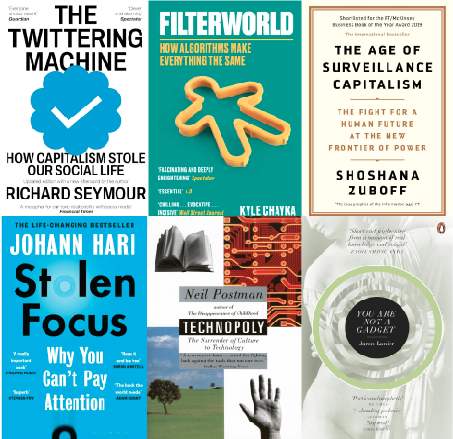
six books on Amazon about the algorithm technology and culture.
Books about the algorithm

________________________________________
1. The Age of Surveillance Capitalism by Shoshana Zuboff
Why it gets buried: Too long. Too true. Too terrifying. Also, it uses big words and makes tech bros uncomfortable.
Buy here (affiliated link)
________________________________________
2. Filterworld: How Algorithms Make Everything the Same by Kyle Chayka

Why it gets buried: Algorithms flatten culture, reduce complexity, and quietly decide what we get to see.
Why it belongs: If you’ve ever wondered why the weird stuff doesn’t go viral anymore ~ this is the answer.
Buy here (affiliated)
________________________________________
3. The Twittering Machine by Richard Seymour
Why it gets buried: It’s about how we’re all trapped in a loop of doom-scrolling for meaning.
Buy here, (affiliated link)
________________________________________
4. Stolen Focus: Why You Can’t Pay Attention by Johann Hari
Why it gets buried: It points at tech, capitalism, and our own bad habits. No one wants to admit that.
Buy here, (affiliated link)
________________________________________
5. Technopoly: The Surrender of Culture to Technology by Neil Postman
Why it gets buried: Old-school but prescient. Doesn’t praise innovation for innovation’s sake.
Buy here, (affiliated link)
________________________________________
6. You Are Not a Gadget by Jaron Lanier
Why it gets buried: The guy helped build the digital world, and now he’s like “actually this might be bad.”
Buy here, (affiliated link)
________________________________________

If you want to resist the algorithm, start by reading the stuff it ignores. Then talk about it somewhere the algorithm isn’t watching (yet).
________________________________________

And here’s a bonus article written by a real writer Max Read (and not a tired bookseller cobbling links together for clicks) about the second book in the list Filterworld: How Algorithms Make Everything the Same by Kyle Chayka. There are some other links to some other good books and blogs on there too,

Affiliate links help support small bookshops and independent creators. If you purchase through the above links, I may earn a small commission at no extra cost to you ~ and it helps me keep my bookshop open. Many thanks for your support. You can also search anything on Amazon here and that might score me a sip of coffee 😉

The Quiet Earthquakes of Anne Tyler – Three Days in June & The Amateur Marriage

Anne Tyler doesn’t write novels that shout. She writes the ones that echo. Long after you’ve finished, her stories hum softly in your chest – stories of family, time, small decisions, and the quiet wreckage they can leave behind.

Her latest, Three Days in June, arrives like a letter from a friend you thought had forgotten you. It’s a tender, intimate portrait of memory, ageing, and the complexity of lifelong relationships. In it, we spend just three days in the company of a woman confronting the strange shape of her life – past, present, and possible.

It echoes a deeper current that’s run through Tyler’s work for decades. If you found yourself moved by Three Days in June, there’s a quiet masterpiece you might’ve missed: The Amateur Marriage.

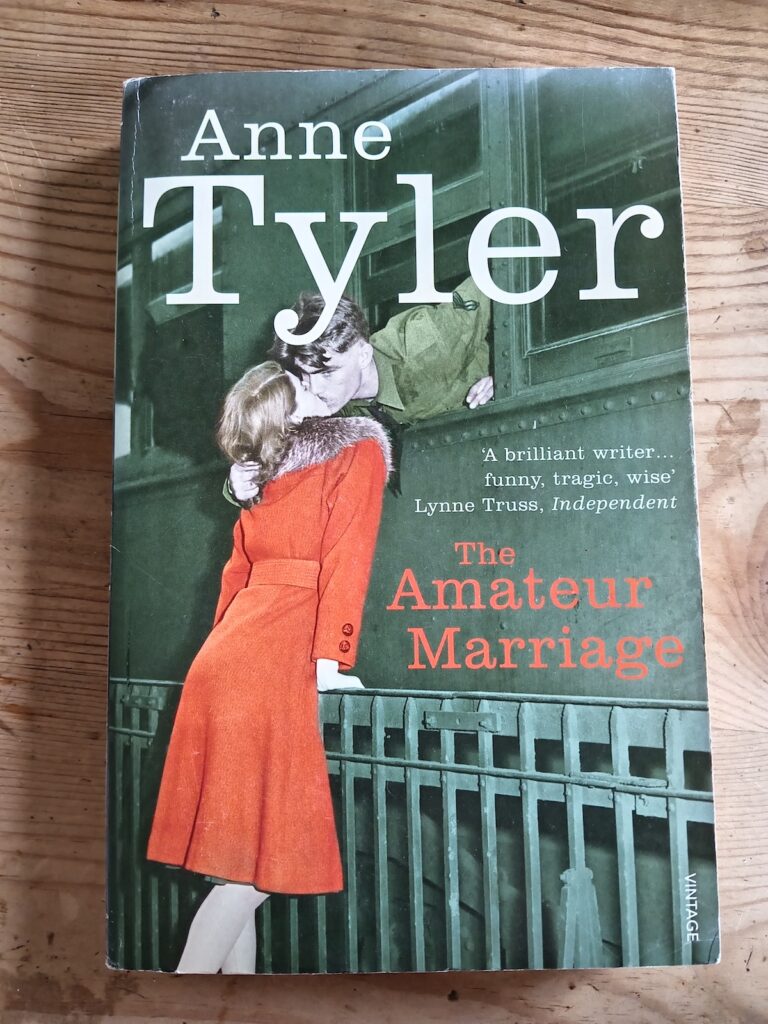
Photo of 2004 version of The Amateur Marriage by Anne Tyler
The Amateur Marriage by Anne Tyler


Published in 2004, The Amateur Marriage is everything the title suggests, and everything Anne Tyler does best. It charts a mismatched couple through decades of mismatched time, showing how ordinary incompatibility can ripple through generations. What makes it remarkable is not drama, but patience. Tyler invites you to watch as these characters stumble and endure, never quite finding the language for what they need.

What ties the two together?

In both books, Tyler examines the small tectonic shifts of domestic life. Nothing explodes – and yet, everything changes. The marriages she writes about aren’t failures or triumphs. They’re lived-in. Flawed. Real. And somehow, hopeful.

These aren’t just stories of romantic entanglement. They’re emotional cartographies – maps of how people learn (or fail to learn) to live beside each other.

If you’re looking for fiction that understands the beauty and ache of everyday life, start with Three Days in Junethen maybe walk backwards through her work. There’s treasure there.

Affiliate links help support small bookshops and independent creators. If you purchase through the above, I may earn a small commission at no extra cost to you ~ and it helps me keep sharing books I love. Many thanks for your support.

Surrendering to the End: J.G. Ballard and the Beautiful Disaster of Eco-Fiction and Cli-Fi

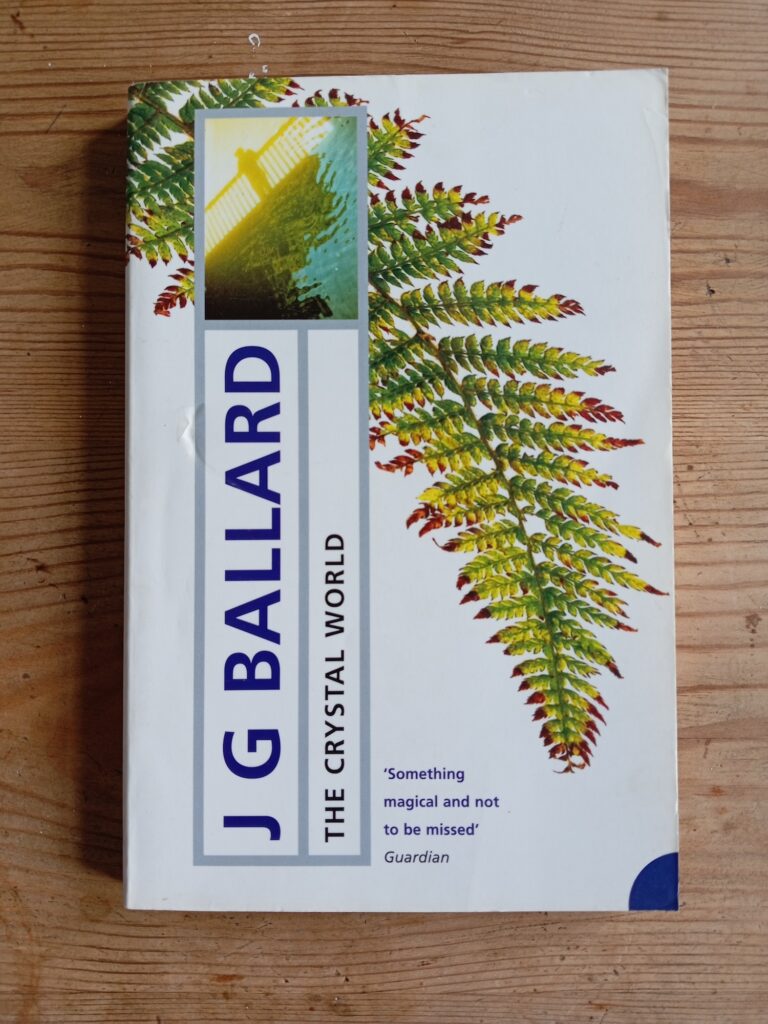
J.G. Ballard's The Crystal World
The Crystal World by J.G. Ballard

Before the climate crisis was headline news, J.G. Ballard was already writing the Earth’s slow descent into alien landscapes. His novels don’t offer action heroes or tech-fixes — they present acceptance, transformation, and often psychological unravelling in the face of planetary change.
Here are three key Ballard novels that sit perfectly in today’s eco-dystopian wave:
________________________________________

The Drowned World (1962)

Set in a future where global warming has melted the polar ice caps, London is submerged and teeming with tropical flora and fauna. The novel isn’t about survival – it’s about evolution. Ballard’s characters feel drawn to the heat and strangeness, pulled backward through time, toward the primordial.
“Soon it would be too hot. Looking out from the stairwell, Kerans watched the huge sun sink below the horizon…”
It’s hypnotic, slow, and eerie – a classic of eco-lit before we had the term.
________________________________________

The Drought (aka The Burning World, 1965)

Rain no longer falls. Rivers are dry. Civilisation cracks open under the pressure of thirst. But again ~ this isn’t Mad Max. Ballard explores how internal landscapes collapse alongside the outer ones. It’s haunting, sun-scorched, and bleak in the most compelling way.
________________________________________

The Crystal World (1966)

Possibly his most dreamlike eco-disaster. A strange crystalline disease spreads through the jungle, turning everything… trees, birds, time itself, into glittering stillness. It’s beautiful. It’s terrifying. And Ballard’s protagonist doesn’t try to stop it – he walks toward it.
________________________________________

Why Ballard Now?

Because we’re arguably already living in that surreal slow-motion collapse: the heat, the flood, the drought. Ballard’s novels feel less like predictions and more like mood-boards for the now.
________________________________________

If you want to explore the roots of climate fiction, or just fancy a read that’ll make you question your grip on reality – I’ve linked the best editions below via affiliate. Every click supports my struggling bookshop and your local climate doom dealer (me).

Buy The Drowned World on Amazon
Get The Crystal World here (i do have this but haven’t added it to the database yet!)
Check out The Drought / The Burning World
All other J.G. Ballard books

Please check out my other recommendations such as mushroomy books and George Orwell books

Plus if you want anything on Amazon if you click through this link it might well earn me some commission at no extra cost to you which might save my little shop from complete closure…